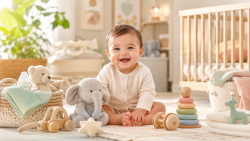
Baby Product Stocks
The baby products sector includes a wide range of products essential for infant care, from diapers and formula to strollers and toys. Companies in this category are typically seen as stable investments due to the constant demand for baby products. This industry has continued to evolve with innovation and consumer demand driving its growth.
Stock | Market Cap | Revenue | Price to Earnings | Dividend Yield | Explanation | |
|---|---|---|---|---|---|---|
 | PGProcter & Gamble | 334.9B | 87.03B | 20.87 | 3.06 | P&G provides products specifically designed for baby care, demonstrating their focus on family-oriented consumer goods. |
 | KVUEKenvue Inc. | 36.45B | 15.40B | 21.99 | 4.37 | Within its Essential Health segment, Kenvue offers baby care products under the Johnson's brand, indicating a commitment to providing essential health products for families and infants. |
 | KMBKimberly-Clark Corp | 36.22B | 15.79B | 18.53 | 4.72 | The Personal Care segment includes a variety of baby products like disposable diapers (Huggies) and training pants that cater to the needs of infants and young children. |
 | BURLBurlington Stores Inc | 22.25B | 11.91B | 35.67 | 0 | As part of their diverse catalog, Burlington offers baby products, highlighting their commitment to providing value on essential items for families. |
 | NWLNewell Brands Inc | 2.62B | 7.24B | -11.87 | 4.8 | The Learning and Development segment of Newell Brands includes baby gear and supplies, particularly marketed under the Graco brand, positioning it within the baby products category. |
 | CRICarter's Inc | 1.43B | 2.97B | 7.35 | 2.55 | The company's product offerings include various essentials for young children, positioning it strongly within the market for baby clothing and accessories. |
 | CODICompass Diversified Holdings | 908.0M | 1.79B | -9.57 | 0 | Ergobaby Carrier, Inc., which designs and distributes baby carriers, is part of CODI's portfolio, connecting it to the Baby Products category. |
 | HNSTHonest Company Inc. | 543.9M | 342.0M | -44.71 | 0 | Honest Company specializes in producing personal care products for infants, featuring a primary product line of diapers and wipes that utilize responsibly sourced materials. These products cater specifically to babies' needs and are designed with safety and comfort in mind. |
 | OWLTOwlet Inc | 168.4M | 107.0M | -3.66 | 0 | Owlet's product line includes items specifically designed for infants, such as the Dream Sock and Owlet Cam, addressing safety and health needs during early childhood. |
 | CRWSCrown Crafts Inc | 31.95M | 83.55M | 6.38 | 10.4 | The company specializes in a range of baby products including bedding, blankets, bibs, soft bath products, and disposable items, directly catering to the needs of infants and toddlers. |
Future Outlook
- Health & Wellness Focus: Consumers are increasingly prioritizing health-conscious baby products, including organic foods, natural skincare, and eco-friendly materials. Companies that meet these demands are likely to see strong growth, as health and wellness trends continue to shape the market.
- Sustainability Trends: There is a growing demand for sustainable baby products, from biodegradable diapers to eco-friendly toys. Brands that adopt sustainable manufacturing practices and products are positioned to benefit from environmentally conscious consumer trends.
- Digital Integration: Smart baby products such as connected baby monitors, wearable devices, and app-based tracking tools are becoming more popular. The integration of technology offers significant growth potential for companies willing to innovate and meet the evolving needs of tech-savvy parents.
- Global Expansion: With emerging markets seeing an increase in middle-class families and birth rates, the demand for baby products is expanding globally. Companies with a strong international presence or plans for expansion can capitalize on these growth opportunities.
Risk Analysis
- Economic Sensitivity: Baby product sales are often affected by broader economic conditions. In times of economic downturn, families may cut back on discretionary spending, impacting the profitability of companies in this sector.
- Regulatory Risks: The baby products industry is subject to stringent safety and health regulations. Changes in government regulations or enforcement could impact the cost of production or lead to recalls, negatively affecting stock performance.
- Supply Chain Disruptions: Global supply chain disruptions, such as those caused by geopolitical instability or natural disasters, can impact the availability and cost of raw materials. Companies reliant on international supply chains may face delays or increased expenses.
- Shifting Consumer Preferences: The baby products market is highly influenced by changing consumer preferences. Shifts in trends, such as a move toward minimalism or an emphasis on sustainability, can result in decreased demand for certain products, affecting company revenues.


