Apple Inc (AAPL)
Electronics • Information Technology
Financial Metrics
Price to Earnings34.21x
Revenue Growth (1Y)14.24%
Debt to Equity0.78x
Strengths
Valuation
Apple Inc is overvalued
News
All
Press Releases
News
Filings

August 12, 2026Apple in Talks to Pay Publishers to Improve AI-Powered Siri

August 10, 2026Apple Stock Downgraded to Sell as Analyst Claims All-Glass iPhone Is Dead

August 10, 2026Don't let a Wall Street analyst's downgrade of Apple scare you out of the stock

August 04, 2026OpenAI Calls Apple’s Trade-Secret Suit ‘Careless’ and ‘Oddly Personal’

August 04, 2026How the 'Baby iPhone' and an Apple supplier leak explain China's recent supply chain moves

August 04, 2026Apple launches fresh legal challenge against UK encrypted data access demand

July 31, 2026Apple earnings leave Wall Street analysts divided as company faces a series of headwinds

July 31, 202610-Q Quarterly Report for 2026 Q3
July 30, 2026Apple reports third quarter results

July 29, 2026Apple Stock Misses the $5 Trillion Mark, Snapping Three-Day Winning Streak

July 29, 2026Apple shares just hit a record. Here's how trader Mike Khouw is playing the move

July 28, 2026Apple Tops Nvidia as the Most Valuable Company, But Its Reign Could Be Brief

July 28, 2026Apple Launches Product Leasing Program Through Klarna
July 28, 2026
Apple Upgrade launches in the United States

July 25, 2026Trump Caught Between Apple and Micron in Fight Over Chinese Chips

July 22, 2026Samsung ups prices as it launches new foldable smartphones ahead of expected Apple debut

July 17, 2026Nvidia, Challenged by Apple, Narrowly Retains Wall Street’s Crown

July 15, 2026Apple Stock Closes at a New High. Earnings Could Change Everything.

July 15, 2026Apple Stock Closes at a New High. Earnings Could Change Everything.

July 14, 2026Apple just hit an all-time high. KeyBanc says investors should sell the tech giant
July 13, 2026Apple Stock Rises. Why This Analyst Just Hiked Price Target to $365.

July 12, 2026Elon Musk and Sam Altman spar on X after Apple files OpenAI lawsuit

July 10, 2026Apple Sues OpenAI and Former Employees, Alleging Theft of Trade Secrets—and a Laptop
July 10, 2026Apple Sues OpenAI and Former Employees, Alleging Theft of Trade Secrets—and a Laptop

July 10, 2026Apple Sues OpenAI, Alleging It Stole Trade Secrets

July 09, 2026The 2 Tech Giants Ready to Resurrect the Magnificent Seven
July 09, 2026Apple scores record 89 Emmy Award nominations, with top category nods for celebrated comedies Widow’s Bay, Shrinking, and Margo’s Got Money Troubles, and global hit dramas Pluribus, Slow Horses, and Your Friends & Neighbors

July 08, 2026Apple to Spend $30 Billion on U.S.-Made Chips From Broadcom

July 08, 2026This former Apple executive is betting on Shenzhen, not Silicon Valley, to create the 'next Apple'
July 08, 2026Apple begins testing CXMT chips for devices sold in China, FT says
July 08, 2026
Apple to increase spend with Broadcom to produce billions more U.S. chips

July 07, 2026Josh Brown likes this 'sleeping giant' AI play and Magnificent 7 member
July 06, 2026Apple's Foldable iPhone Could 'Sell Out Immediately'

July 03, 2026CNBC Daily Open: Trump's children, stock buying spree in the spotlight

July 02, 2026Google loses fight over record $4.7 billion EU antitrust fine
A. Company Overview
Apple Inc. is a multinational technology company known for its innovation in consumer electronics, software, and online services. Established in 1976, Apple designs, manufactures, and markets a wide range of products, including smartphones, personal computers, tablets, wearables, and accessories. The company also provides various services that complement its hardware offerings, creating an integrated ecosystem that enhances user experience and engagement. Apple’s fiscal year spans a 52- or 53-week period, concluding on the last Saturday of September.
B. Business Segments
Apple operates through multiple segments tailored to geographical markets. The primary reportable segments include:
- Americas: Encompassing both North and South America.
- Europe: Including European countries, as well as India, the Middle East, and Africa.
- Greater China: Covering mainland China, Hong Kong, and Taiwan.
- Japan: Specific to the Japanese market.
- Rest of Asia Pacific: Encompassing Australia and other Asian countries not included in the aforementioned segments.
Each segment is managed independently to align with specific market dynamics and consumer behavior, enabling Apple to adapt to local conditions and preferences effectively.
C. Products
Apple's product line is extensive and renowned for its design, functionality, and integration across its ecosystem. Key categories include:
iPhone
The iPhone is Apple's flagship smartphone line, operating on the iOS platform. Current models include the iPhone 15 Pro, iPhone 15, iPhone 14, iPhone 13, and iPhone SE. The iPhone is pivotal in Apple’s business strategy, contributing significantly to revenue and shaping market dynamics with its innovative features and designs.
Mac
The Mac encompasses Apple's series of personal computers powered by the macOS operating system. This line includes:
- MacBook Air: Known for its portability and efficiency.
- MacBook Pro: Targeted at professionals requiring high-performance computing.
- iMac: An all-in-one desktop solution.
- Mac mini: A compact desktop option.
- Mac Studio: Designed for demanding creative tasks.
- Mac Pro: A high-end desktop targeted at professionals in creative industries.
iPad
The iPad serves as a multipurpose tablet series that operates on iPadOS. The models include:
- iPad Pro: Targeted at professionals and creative users.
- iPad Air: Offers a balance of performance and price.
- Standard iPad: Accessible for general consumers.
- iPad mini: A smaller, more portable option.
Wearables, Home and Accessories
Apple’s wearables offer innovative functionality:
- Apple Watch: Smartwatches operating on watchOS, including models like Apple Watch Ultra 2, Apple Watch Series 9, and Apple Watch SE.
- AirPods: A range of wireless headphones, including AirPods, AirPods Pro, AirPods Max, and Beats products.
Home products include Apple TV and HomePod devices, providing media streaming and high-fidelity audio experiences. Accessories encompass both Apple-branded and third-party products.
D. Services
Apple has diversified its revenue stream by offering a robust set of services, which now represent a growing portion of its overall income. Key services include:
Advertising
Apple provides advertising solutions through its platforms, enabling third-party companies to reach consumers through targeted ad placements.
AppleCare
AppleCare offers various service and support options under the brand, providing customers with technical support, repair coverage, and protection against accidental damage.
Cloud Services
Apple’s cloud services facilitate the storage and synchronization of users' content, making it accessible across multiple devices.
Digital Content
Through platforms like the App Store, Apple allows users to download applications and digital content. Services such as Apple Music, Apple News+, and Apple TV+ offer subscription-based models for music, news, and original video content, respectively.
Payment Services
Apple has integrated financial solutions, such as Apple Card and Apple Pay, allowing seamless transactions and enhancing the user experience with digital payment options.
E. Market and Distribution
Apple targets various customer segments, including consumers, small and mid-sized businesses, educational institutions, enterprises, and government entities. It employs both direct sales through retail and online stores and an array of indirect channels, including third-party retailers and cellular carriers. In the previous year, 37% of total net sales came from direct distribution channels, while 63% was through indirect channels.
F. Competition
The competitive landscape for Apple is intense, characterized by rapid technological advancements, price competition, and short product life cycles. Competitors often engage in aggressive pricing and may infringe upon Apple's intellectual property. Key competitive factors include product quality, design innovation, ecosystem strength, and brand reputation. As the market evolves, Apple focuses on continual innovation to meet consumer demand and fend off competition.
G. Supply of Components
Apple sources its components from multiple suppliers, although some critical components have single or limited sources. The competitive nature of the technology industry often leads to shortages and fluctuating prices. The company employs custom components that are unique to its products, and reliance on these specialized components poses potential risks.
H. Research and Development
Research and development (R&D) is vital to Apple’s strategy, ensuring the company remains at the forefront of technological advancement. Investments in R&D focus on enhancing existing products, creating new innovations, and acquiring relevant technologies.
I. Intellectual Property
Apple’s extensive portfolio of intellectual property rights is essential for differentiating its products and services. The company actively seeks to protect its innovations through patents, copyrights, and trademarks. While external licenses are also utilized, reliance on proprietary technology forms the core of Apple’s product offerings.
J. Business Seasonality and Product Introductions
Seasonality impacts Apple’s sales, particularly during the holiday season, where net sales peak. The timing of new product launches further influences sales patterns, as consumer anticipation can lead to fluctuations in sales across periods.
Through its innovative approach to technology, product design, and an extensive service offering, Apple Inc. continues to be a major player in the global technology landscape, consistently redefining market norms and setting industry standards.
Stock Infos
SectorInformation Technology
IndustryElectronics
CEOTimothy D. Cook
Dividends

Hardware Manufacturers
Apple designs, manufactures, and markets a wide range of consumer electronics, including smartphones (iPhone), personal computers (Mac), tablets (iPad), wearables (Apple Watch, AirPods), and home devices (Apple TV, HomePod), positioning the company as a key player in the hardware manufacturing sector.
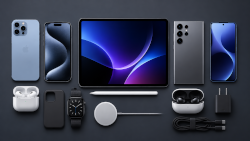
Mobile Devices
The iPhone is a flagship product in Apple’s lineup and represents one of the leading mobile devices in the market, showcasing innovation, design, and technology that define the smartphone category.

Wearables
Apple’s wearable technology includes the Apple Watch and AirPods, which integrate advanced features for health tracking and audio, contributing significantly to the wearables market.

Cloud Computing
Apple provides cloud services that facilitate the storage and synchronization of users' content, enabling access across multiple devices, which is a critical component of its ecosystem.

Digital Payment Systems
With services like Apple Pay and Apple Card, Apple enables digital transactions, enhancing user convenience and security in mobile payments.

Streaming Services
Apple TV+ is part of Apple’s range of services that provides original video content, promoting the company’s expansion into media and entertainment streaming.
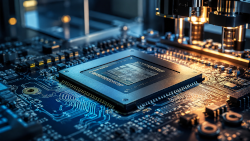
Application-Specific Integrated Circuits (ASICs)
Apple develops custom chips like the M1 and A-series processors designed specifically for its products, showcasing its commitment to high-performance and energy-efficient hardware.

Advertising Agencies
Apple offers advertising solutions through its various platforms, enabling third-party companies to reach consumers via targeted advertising, making it a participant in the advertising industry.
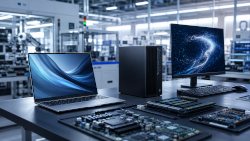
Computer Manufacturers
Apple Inc. designs, develops, and sells a wide range of computers, including MacBooks, iMacs, and Mac Studios, which are integral to its product portfolio.

Switching Costs
Apple's ecosystem of devices and services (iCloud, App Store, Apple Music, etc.) creates high switching costs for users. Once customers invest in Apple products, moving to a competitor involves losing access to a seamless experience and a significant amount of purchased content.

Customer Loyalty
Apple has cultivated strong emotional bonds with its customers, leading to high brand loyalty. This loyalty drives repeat purchases and creates a dedicated customer base that is less sensitive to price changes, setting Apple apart from competitors.

Platform Moat
Apple's platforms, such as iOS and macOS, create an ecosystem that connects users with developers, resulting in a vast array of applications and services. This interdependence makes Apple's platforms indispensable to both users and developers, reinforcing its market position.