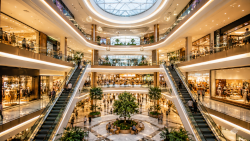
Shopping Mall Stocks
Shopping mall stocks represent the equity of real estate companies that own or manage retail properties. These stocks are significant in the commercial real estate sector, providing investors with opportunities for capital appreciation and income generation. Investors should be mindful of both growth potential and risks, particularly those influenced by retail trends and economic conditions.
Stock | Market Cap | Revenue | Price to Earnings | Dividend Yield | Explanation | |
|---|---|---|---|---|---|---|
 | SPGSimon Property Group, Inc | 71.36B | 6.94B | 15.45 | 0.67 | Simon Property Group owns or has interests in a significant number of shopping malls, which are a cornerstone of its retail property portfolio, providing venues for various retail experiences and attracting well-known consumer brands. |
 | KIMKimco Realty Corp | 16.21B | 2.18B | 26.72 | 4.48 | Kimco's portfolio includes a variety of shopping centers, which can be categorized as shopping malls that provide retail spaces for grocery stores, home improvement centers, and discount retailers, highlighting their role in retail shopping experiences. |
 | REGRegency Centers Corp | 13.86B | 1.61B | 24.94 | 4 | Regency Centers is recognized for developing and managing neighborhood and community shopping centers, which can be categorized as shopping malls in a broader sense. |
 | BRXBrixmor Property Group Inc | 9.12B | 1.40B | 21.09 | 4.03 | Brixmor Property Group's assets consist of 362 shopping centers, thus falling into the category of shopping malls that provide various consumer services and products. |
 | MACMacerich Co | 6.98B | 1.00B | -41.23 | 2.76 | Macerich primarily manages a portfolio of regional town centers and community/power shopping centers that serve as retail hubs, hosting a variety of stores and services under one roof. |
 | KRGKite Realty Group Trust | 5.27B | 806.1M | 15.63 | 5.19 | Kite Realty Group Trust's focus on open-air shopping centers and retail properties makes it a key player in the shopping malls category, providing spaces that house various retail tenants. |
 | PECOPhillips Edison & Co | 5.16B | 750.8M | 35.95 | 3.48 | The company manages a significant portfolio of shopping centers, specifically grocery-anchored malls that accommodate both physical retail and digital shopping experiences. |
 | SKTTanger Inc | 4.42B | 1.19B | 17.93 | 6.23 | Tanger Inc. specializes in managing outlet shopping centers and open-air lifestyle centers, which are akin to modern shopping malls, offering diverse retail experiences that combine shopping and dining. |
 | CURBCurbline Properties Corp. | 3.46B | 224.0M | 117.9 | 2.08 | Curbline's portfolio consists of convenience shopping centers that function similarly to shopping malls but are strategically located at high-traffic intersections, focusing on small retail units that meet daily consumer needs. |
 | UEUrban Edge Properties | 2.75B | 495.0M | 40.54 | 7.54 | Urban Edge manages several shopping malls as part of its diverse property portfolio, which serves as critical retail hubs in urban environments. |
 | IVTInvenTrust Properties Corp. | 2.59B | 317.2M | 170.13 | 2.89 | While not traditional shopping malls, InvenTrust's retail holdings include community and neighborhood shopping centers that serve as essential consumer spaces, which are akin to the shopping mall concept in terms of providing a variety of retail options. |
 | CBLCBL & Associates Properties Inc | 1.76B | 588.1M | 8.13 | 3.77 | The company's property portfolio includes regional shopping malls, outlet centers, and lifestyle centers, which are key assets that generate rental income, aligning it directly with the shopping malls category. |
 | BFSSaul Centers Inc | 850.2M | 302.2M | 24.39 | 11.12 | The company maintains a portfolio that includes 50 shopping center properties, indicating its direct involvement in the shopping mall segment of the retail industry. |
 | SITCSITE Centers Corp | 156.3M | 71.26M | 1.22 | 227.49 | SITE Centers manages a portfolio of 114 shopping centers focused on open-air retail environments, making it a significant player in the shopping malls category. |
Future Outlook
- Shift Toward Experiential Retail: As traditional shopping habits change, malls are increasingly focusing on creating experiences rather than just offering retail space. This includes entertainment venues, dining options, and interactive events. Investors can expect growth in mall stocks that adapt to these shifts.
- E-commerce Integration: The rise of online shopping has pushed malls to adapt by integrating e-commerce into their business models. This could involve partnerships with online retailers or the development of pick-up and drop-off hubs, offering a hybrid shopping experience that appeals to tech-savvy consumers.
- Sustainability and Green Building Trends: Investors are paying closer attention to the environmental impact of commercial properties. Malls adopting sustainable practices, such as energy-efficient designs and waste reduction programs, could see higher demand from both tenants and shoppers, enhancing their profitability.
- Regional Expansion in Emerging Markets: Emerging markets are seeing rapid urbanization, with shopping malls becoming an integral part of the retail infrastructure. Investing in mall stocks focused on regions like Southeast Asia or Africa could offer significant growth potential as these areas develop their middle class.
Risk Analysis
- Decline of Brick-and-Mortar Retail: The continued shift from physical stores to online shopping remains a significant risk for shopping malls. With retailers closing locations and consolidating operations, demand for physical retail space may decline, impacting mall revenues and occupancy rates.
- Economic Downturns and Consumer Spending: Economic slowdowns and recessions can lead to decreased consumer spending, affecting the foot traffic and sales performance of mall tenants. This, in turn, could lead to reduced rental income and lower stock values for mall-focused companies.
- Competition from Non-Traditional Retail: The rise of non-traditional retail options, such as pop-up stores, online marketplaces, and direct-to-consumer models, can compete with the traditional mall format. This competition may limit foot traffic and decrease the profitability of mall-based businesses.
- High Operating Costs: Shopping malls have high maintenance and operational costs, including security, utilities, and staff. If these costs increase due to inflation or rising energy prices, it could negatively affect profit margins and overall stock performance.


