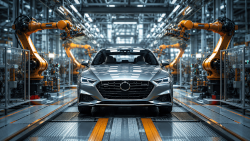
Automobile Manufacturer Stocks
Automobile manufacturing stocks represent companies involved in the production and sales of vehicles. Investors in this category seek exposure to an industry driven by innovation, consumer demand, and global economic factors. These stocks can offer growth potential but come with specific market risks tied to supply chain issues, technological advancements, and shifting consumer preferences.
Stock | Market Cap | Revenue | Price to Earnings | Dividend Yield | Explanation | |
|---|---|---|---|---|---|---|
 | ETNEaton Corp PLC | 178.6B | 30.02B | 46.67 | 0.93 | Eaton operates in the Vehicle segment, delivering advanced technologies and products for major vehicle manufacturers, highlighting its role in automobile manufacturing. |
 | UNPUnion Pacific Corp | 174.4B | 25.41B | 23.81 | 1.88 | In its Premium Operations segment, Union Pacific specializes in the logistics of finished automobiles and automotive parts, overseeing their transportation across North America and enhancing distribution capabilities for automotive manufacturers. |
 | MMM3M Co | 94.77B | 25.18B | 31.62 | 1.68 | Through its Transportation and Electronics segment, 3M manufactures products for the automotive sector, including advanced materials that enhance vehicle performance and efficiency. |
 | CMICummins Inc | 87.80B | 34.70B | 32.34 | 1.26 | As a manufacturer of diesel and natural gas engines as well as hybrid powertrains for various applications, Cummins operates in the automobile manufacturing sector, supplying engines for trucks and commercial vehicles. |
 | ITWIllinois Tool Works Inc | 83.30B | 16.46B | 26.08 | 2.2 | ITW's Automotive OEM segment provides specialized components and fasteners for the automotive industry, focusing on both plastic and metal components used in vehicles, which directly relates to automobile manufacturing. |
 | CVNACarvana Co | 79.76B | 25.05B | 50.87 | 0 | While Carvana does not manufacture vehicles, it operates within the automotive industry by reselling used cars, which ties it to the broader context of automobile manufacturing and sales. |
 | GMGeneral Motors Co | 76.12B | 185.5B | 39.04 | 1.54 | GM designs, manufactures, and sells a diverse range of vehicles including trucks, cars, and crossovers under brands like Buick, Cadillac, Chevrolet, and GMC, making automobile manufacturing a core aspect of their business. |
 | ORLYO'Reilly Automotive Inc | 74.46B | 18.57B | 28.1 | 0 | O'Reilly Automotive supplies parts for both domestic and foreign vehicles, trucks, and vans, which connects them to the broader automobile manufacturing industry as they provide essential components necessary for vehicle maintenance and repairs. |
 | PCARPACCAR Inc | 68.98B | 27.81B | 27.55 | 2.09 | As a manufacturer of trucks, PACCAR falls under the broader automobile manufacturing category where it develops and assembles various vehicle types for commercial use. |
 | TELTE Connectivity Ltd | 62.01B | 19.32B | 20.56 | 1.37 | TE Connectivity's Transportation Solutions segment focuses on connectivity and sensor technologies for automotive applications, including products that enhance the functionality and reliability of vehicles. |
 | GRMNGarmin Ltd | 59.78B | 7.67B | 31.84 | 1.21 | Garmin collaborates with automobile manufacturers to produce domain controllers and infotainment units that enhance vehicle navigation and multimedia systems. |
 | FFord Motor Co | 55.14B | 187.9B | -7.46 | 4.36 | As a longstanding automotive company, Ford manufactures a wide range of vehicles, including traditional internal combustion engine cars, hybrids, and electric vehicles, across various segments such as trucks, SUVs, and luxury models. |
 | FLEXFlex Ltd | 46.00B | 29.26B | 47.28 | 0 | Flex manufactures components and systems for automotive technologies, focusing on next-generation mobility and autonomous systems. |
 | JBLJabil Inc | 38.36B | 33.59B | 44.51 | 0.091 | Through its DMS segment, Jabil provides engineering and manufacturing services to the automotive industry, focusing on innovative solutions necessary for modern vehicle production. |
 | PPGPPG Industries Inc | 25.47B | 16.42B | 16.21 | 2.5 | PPG serves the automotive market with its paint and coating solutions, addressing both original equipment and aftermarket needs in automobile manufacturing. |
Future Outlook
- Growth of Electric Vehicles (EVs): Electric vehicles are rapidly gaining market share, with many traditional automakers pivoting towards producing EVs. Governments around the world are implementing stricter environmental regulations, making the push for cleaner vehicles more important. This trend presents significant opportunities for manufacturers investing in electric mobility and related infrastructure.
- Autonomous Driving Innovations: The integration of autonomous driving technology is revolutionizing the automobile industry. Companies investing in self-driving technology could be poised for long-term growth, although the adoption of such technologies will depend on regulatory approval and consumer acceptance. Manufacturers incorporating autonomous systems are setting themselves up for future leadership in the market.
- Sustainability and Green Manufacturing: Sustainability is increasingly becoming a competitive advantage in the automotive sector. Manufacturers focusing on eco-friendly practices, from sourcing materials responsibly to implementing greener production processes, are attracting environmentally conscious consumers and investors. This shift towards green manufacturing is expected to grow in importance in the coming years.
- Global Supply Chain Expansion: Automobile manufacturers are expanding production capacity in emerging markets to meet rising demand, particularly in Asia and Africa. These regions represent untapped growth potential for car manufacturers. Strategic investments in supply chain networks and local production facilities can help boost long-term growth prospects for manufacturers targeting these regions.
Risk Analysis
- Economic Slowdowns: Automobile sales are highly sensitive to economic cycles, with recessions or slowdowns leading to lower consumer spending and reduced vehicle demand. During periods of economic uncertainty, automobile stocks may experience volatility and declines in profitability.
- Supply Chain Disruptions: The global automobile industry has faced significant supply chain disruptions, including shortages of critical components like semiconductors. These disruptions can lead to production delays, increased costs, and reduced revenues, affecting the stock performance of automobile manufacturers.
- Technological and Regulatory Challenges: As the industry embraces new technologies, particularly electric and autonomous vehicles, manufacturers must navigate complex regulatory environments. Any delay in adopting these technologies, along with regulatory hurdles, could hamper a company's growth potential and investor confidence.
- Intense Competition: The automobile industry is highly competitive, with numerous players vying for market share, especially in the EV space. New entrants and established automakers alike are pushing for dominance, leading to price wars, shrinking profit margins, and the constant need for innovation to maintain competitive positioning.


