Household Appliance Stocks
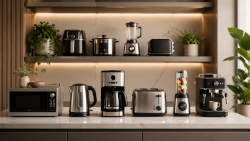
Household appliances stocks represent companies that design, manufacture, and sell products for home use, such as refrigerators, washing machines, and air conditioners. These stocks are relevant to investors interested in consumer goods, technological innovations, and market demand trends. The sector can offer opportunities for stable returns and long-term growth.
Stock | Market Cap | Revenue | Price to Earnings | Dividend Yield | Explanation | |
|---|---|---|---|---|---|---|
 | HDHome Depot Inc | 342.4B | 166.5B | 24.44 | 2.68 | The Home Depot offers a selection of household appliances as part of its product lineup, which includes items essential for home renovation and improvement. |
 | PGProcter & Gamble | 334.9B | 87.03B | 20.87 | 3.06 | P&G manufactures household care products, including fabric care and home cleaning items, which are essential for daily household maintenance. |
 | LOWLowe's Companies Inc | 121.0B | 88.43B | 18.23 | 2.2 | The company offers an extensive selection of household appliances, including refrigerators, washers, dryers, and more, catering to the needs of homeowners looking to improve their living spaces. |
 | CLColgate Palmolive Co | 73.59B | 21.04B | 36.11 | 2.48 | Colgate-Palmolive offers a diverse range of household cleaning products, including dishwashing liquids and household cleaners under brands like Ajax, Palmolive, and Fabuloso. |
 | TGTTarget Corp | 69.94B | 106.3B | 20.27 | 2.94 | Target sells various household appliances as part of its general merchandise assortment, catering to consumers looking for convenience and functionality in their everyday lives. |
 | FERGFerguson Enterprises Inc | 47.43B | 29.05B | 25.42 | 1.42 | Ferguson offers a range of household appliances as part of its product lineup, catering to both residential and commercial markets. |
 | KMBKimberly-Clark Corp | 36.22B | 15.79B | 18.53 | 4.72 | The products in Kimberly-Clark's Consumer Tissue segment, such as paper towels and napkins, are considered essential household items that contribute to the functioning of everyday home environments. |
 | DGDollar General Corp | 26.38B | 43.07B | 16.86 | 1.97 | As part of its home products category, Dollar General sells small appliances, which positions it within the household appliances sector of retail. |
 | SNSharkNinja, Inc. | 26.22B | 6.39B | --- | --- | SharkNinja specializes in small household appliances, including products for cleaning (under the Shark brand) and cooking/food preparation (under the Ninja brand). Their innovations in these categories, like vacuum cleaners and blenders, reflect a strong presence in the household appliances market. |
 | DLTRDollar Tree Inc | 24.71B | 19.74B | 19.21 | 0 | Dollar Tree's product assortment includes everyday household items, thus it features various household goods that may encompass small appliances and tools for home use. |
 | CHDChurch & Dwight Co Inc | 24.01B | 6.22B | 32.24 | 1.2 | Church & Dwight offers a range of household products, particularly cleaning supplies that highlight the effectiveness of baking soda, including laundry detergents and household cleaning sprays. |
 | AMCRAmcor PLC | 21.52B | 22.19B | 31.75 | 5.52 | Amcor extends its packaging innovation to products in the home and personal care sectors, which may include items related to household appliances and consumables. |
 | BBYBest Buy Co Inc | 17.49B | 41.86B | 15.31 | 4.58 | Best Buy offers a wide range of household appliances, from large items like refrigerators to small kitchen gadgets, making this category relevant to their merchandise and services. |
 | BALLBall Corp | 16.44B | 14.32B | 17.37 | 1.31 | Ball Corporation serves the personal care and household products sectors by producing aluminum packaging solutions, which may include containers used for various household items. |
 | MASMasco Corp | 14.71B | 7.62B | 16.63 | 2.05 | Masco's product lines include plumbing fixtures such as faucets, showerheads, and bathing units, which are vital household appliances that enhance functionality and aesthetics in residential settings. |
Future Outlook
- Rise of Smart Appliances: The demand for smart home technologies is rapidly increasing, with household appliances becoming more connected and integrated into home automation systems. This offers growth potential as consumers seek convenience and efficiency.
- Sustainability and Energy Efficiency: As environmental concerns grow, many appliance manufacturers are focusing on developing energy-efficient products. This trend aligns with both consumer demand for eco-friendly solutions and government regulations promoting sustainability.
- Expansion in Emerging Markets: Emerging markets are showing strong demand for household appliances as urbanization and rising incomes create new consumer bases. Companies with global reach are well-positioned to tap into these growing markets for long-term growth.
- Innovation in Product Features: Appliance manufacturers are continuously innovating with new features like AI-powered systems, self-cleaning capabilities, and advanced user interfaces. These innovations could drive higher sales and customer satisfaction.
Risk Analysis
- Intense Market Competition: The household appliances market is highly competitive, with both established brands and new entrants vying for market share. This competition can pressure profit margins and lead to pricing wars.
- Economic Sensitivity: Household appliances are considered discretionary items, and their sales can be affected by broader economic conditions. Economic downturns or increased interest rates could reduce consumer spending on non-essential goods.
- Supply Chain Disruptions: The sector is vulnerable to disruptions in the global supply chain, particularly for raw materials like metals and plastics. Any interruption can impact production timelines and cost structures.
- Shifting Consumer Preferences: Consumer preferences are continually evolving, and failing to adapt to new trends (e.g., demand for sustainable products or smart technology) could result in lost market opportunities.


