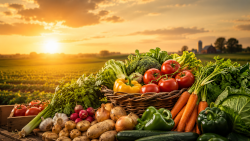
Agricultural Product Stocks
Agricultural products stocks include companies that produce or supply goods like crops, livestock, and fertilizers. These stocks are crucial to the global economy, affecting food production, sustainability, and commodity markets. Investors focus on this sector for long-term growth and stability due to increasing global demand for food and agricultural goods.
Stock | Market Cap | Revenue | Price to Earnings | Dividend Yield | Explanation | |
|---|---|---|---|---|---|---|
 | NSCNorfolk Southern Corp | 75.33B | 12.54B | 28.58 | 1.61 | Norfolk Southern's transportation services include handling a variety of agricultural products like soybeans and corn. Its revenue derived from shipping these products positions it as an essential link in the agricultural supply chain. |
 | TSCOTractor Supply Co | 18.98B | 15.75B | 18.76 | 2.61 | The company specializes in livestock and agricultural supplies, featuring essential products for farming and ranching operations, which align with the lifestyle needs of its rural customer base. |
 | WMSAdvanced Drainage Systems Inc | 10.59B | 3.22B | 23.49 | 0.56 | The company's drainage solutions are tailored for agricultural applications, enhancing water management in farming and rural settings. |
 | LWLamb Weston Holdings Inc | 7.30B | 6.61B | 25.18 | 2.84 | As a producer of potato products, Lamb Weston is part of the agricultural industry, sourcing raw potatoes from strategic grower networks to ensure quality inputs for its product offerings. |
 | MOSMosaic Co | 7.18B | 12.24B | -11.25 | 4.19 | Mosaic produces and markets concentrated phosphate and potash crop nutrients, which are essential for agricultural practices and contribute to crop yield and quality. |
 | PPCPilgrims Pride Corp | 6.39B | 18.43B | 11.72 | 7.8 | The company sources raw materials such as grains for animal feed, citing its agricultural connections and influence in agricultural products. |
 | ABCBAmeris Bancorp | 5.94B | 1.26B | 15.79 | 0.92 | Ameris Bancorp offers specialized agricultural loans designed to meet the needs of farmers and related businesses, reflecting its commitment to supporting the agricultural sector. |
 | SEBSeaboard Corp | 4.02B | 10.18B | 6.35 | 0.22 | Seaboard's CT&M segment operates agricultural commodity trading, sourcing, and processing various agricultural products, reflecting its engagement in the agricultural sector on a global scale. |
 | CALMCal-Maine Foods Inc | 3.85B | 2.91B | 12.18 | 6.01 | Cal-Maine's operations involve agricultural practices, including managing flocks and producing feed for its layers, categorizing its offerings under agricultural products. |
 | POSTPost Holdings Inc | 3.54B | 8.41B | 12.08 | 0 | Given its engagement in the production of ingredients like eggs and potatoes for foodservice offerings, Post Holdings is connected to agricultural products, emphasizing their role in sourcing and processing agricultural items. |
 | CVICVR Energy Inc | 3.52B | 8.47B | 51.05 | 0.28 | The nitrogen fertilizers produced by CVR Energy are essential for agricultural customers, contributing to the global food production chain, particularly in developing regions. |
 | USLMUnited States Lime & Minerals Inc | 3.42B | 376.9M | 25.46 | 0.2 | The company provides agricultural products like pulverized limestone (PLS) used in agricultural feeds and poultry production, catering to the needs of the agriculture sector. |
 | CENTACentral Garden & Pet Co A | 2.42B | 3.08B | 14.57 | 0.047 | Central's garden offerings include grass seeds, vegetable seeds, and live plants, which are essential agricultural products that cater to consumers interested in gardening and lawn maintenance. |
 | AGM.AFederal Agricultural Mortgage Corp A | 2.38B | 445.5M | 10.43 | 3.94 | The company supports financing activities within the agricultural sector, helping to fund agricultural production and processing facilities, which are essential agricultural products. |
 | ANDEAndersons Inc | 2.22B | 10.93B | 12.57 | 1.22 | The Andersons operates in the agricultural supply chain, merchandising a variety of agricultural commodities such as corn, wheat, soybeans, and feed ingredients, which directly qualifies them under agricultural products. |
Future Outlook
- Technological Advancements: The agricultural industry is embracing technology to improve efficiency and reduce environmental impact. Innovations such as precision farming, AI-driven crop monitoring, and automation in production are creating opportunities for growth in agricultural product stocks.
- Sustainability Trends: Sustainability is becoming a central focus, as both consumers and governments push for more eco-friendly agricultural practices. Companies adopting sustainable practices, such as water conservation and organic farming, are expected to gain a competitive edge.
- Rising Global Demand: The global population is projected to reach 9 billion by 2050, driving increased demand for food and agricultural products. As consumer preferences evolve and incomes rise, especially in emerging markets, agricultural companies are set to benefit from this growing market.
- Climate Resilience Initiatives: Agricultural companies are investing in climate-resilient crops and farming methods to combat the effects of climate change. This includes drought-resistant crops, improved soil health, and sustainable farming practices that ensure long-term viability.
Risk Analysis
- Weather and Climate Variability: Agricultural production is highly susceptible to weather conditions such as droughts, floods, and extreme temperatures. These unpredictable events can significantly affect crop yields and commodity prices, creating volatility in agricultural stocks.
- Commodity Price Fluctuations: Agricultural product prices can be volatile, impacted by supply and demand dynamics, global trade policies, and geopolitical events. Investors must be prepared for price swings that could affect the profitability of companies in this sector.
- Regulatory and Policy Risks: Government regulations regarding agricultural subsidies, environmental standards, and trade tariffs can have a substantial impact on the performance of agricultural companies. Changes in policy could create uncertainty and affect stock values.
- Labor and Supply Chain Issues: Labor shortages and supply chain disruptions can affect agricultural production and distribution. The industry is highly reliant on seasonal labor, and issues like transportation delays or rising labor costs can negatively impact profitability.


