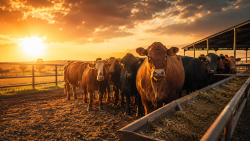
Meat Producer Stocks
Meat production stocks represent companies involved in the breeding, processing, and distribution of meat products. This category is vital for investors interested in the agricultural and food sectors, offering opportunities tied to global consumption trends and sustainability innovations. The industry is impacted by consumer demand, environmental factors, and evolving production methods.
Stock | Market Cap | Revenue | Price to Earnings | Dividend Yield | Explanation | |
|---|---|---|---|---|---|---|
 | TSNTyson Foods Inc | 19.63B | 55.69B | 34.21 | 3.58 | The company processes and markets various meats including chicken, beef, and pork, highlighting its core activities in meat production and its renowned ability to supply these products to various markets. |
 | HRLHormel Foods Corp | 13.42B | 12.21B | 28.75 | 4.76 | Hormel Foods has a longstanding history in meat processing, and it continues to offer a variety of meat products, including pork, turkey, beef, and chicken. This association with meat processing directly links to the meat production category. |
 | DARDarling Ingredients Inc | 10.00B | 6.54B | 16.74 | 0.026 | The company processes animal by-products from beef, poultry, and pork, producing finished products like meat and bone meal, which are key components in the meat production supply chain. |
 | SFDSmithfield Foods Inc | 8.95B | 15.47B | 8.46 | 4.97 | As one of the largest pork producers in the world, Smithfield focuses on raising and processing pigs, offering a wide range of meat products including fresh cuts, bacon, sausages, and hams. |
 | PPCPilgrims Pride Corp | 6.39B | 18.43B | 11.72 | 7.8 | As a company that specializes in producing fresh, frozen, and value-added chicken and pork products, Pilgrim's Pride falls squarely within the meat production category. |
 | SEBSeaboard Corp | 4.02B | 10.18B | 6.35 | 0.22 | The Pork segment of Seaboard oversees the entire process of hog production and pork processing, thus directly contributing to the meat production industry, including a joint venture that handles large-scale processing. |
 | MAMAMama's Creations Inc | 723.3M | 189.2M | 118.47 | 0 | The product offerings include various meat products such as beef and turkey meatballs, meatloaf, and sausages, categorizing them under meat production as a significant aspect of their manufacturing portfolio. |
 | HFFGHF Foods Group Inc. | 99.17M | 1.25B | -2.87 | 0.81 | HF Foods procures a variety of meat products, which form a significant part of its offerings. Their procurement strategy focuses primarily on domestic goods like meat and poultry, catering to the specific needs of their clientele. |
 | BRIDBridgford Foods Corp | 57.36M | 233.1M | -4.05 | 0 | The company specializes in meat processing and distribution, offering a variety of meat products including beef jerky and dry sausages, which highlights its crucial role in the meat production industry. |
Future Outlook
- Growth of Plant-Based Meat Alternatives: The rise of plant-based meat alternatives is reshaping the meat industry. As consumers demand healthier and more sustainable options, plant-based companies are gaining traction. This shift is expected to influence meat production stocks as traditional companies adapt or partner with alternative protein producers.
- Advances in Meat Production Technology: Technological innovations, such as lab-grown meat and precision farming, are set to improve efficiency and reduce environmental impacts. Investors can look for companies adopting these new technologies to gain a competitive edge in the market.
- Increased Global Meat Demand: With the global population rising, particularly in emerging markets, meat demand is projected to increase. This surge presents growth opportunities for meat production companies, especially those that can scale production and maintain quality in rapidly growing regions.
- Sustainability and Ethical Sourcing: Sustainability is becoming a central focus for both consumers and investors. Companies that invest in ethical sourcing, animal welfare, and environmentally friendly practices are likely to see increased consumer loyalty and regulatory support.
Risk Analysis
- Fluctuating Commodity Prices: The prices of feed, fuel, and other commodities directly impact the cost of meat production. Volatility in these markets can squeeze profit margins for producers, affecting stock performance.
- Regulatory Risks and Sustainability Pressure: The meat industry is under increasing scrutiny from governments and environmental organizations regarding emissions and animal welfare. Stricter regulations can lead to higher operational costs or necessitate costly investments in compliance measures.
- Consumer Shifts Toward Plant-Based Diets: As consumers move toward plant-based diets and reduce meat consumption for health or environmental reasons, traditional meat companies could face declining demand, affecting sales and stock values.
- Supply Chain Disruptions: The global meat supply chain can be easily disrupted by natural disasters, pandemics, or trade restrictions. These disruptions can lead to increased costs and delays, impacting profitability and stock performance.


