
Nike Inc (NKE)
Consumer Durables • Consumer Discretionary
Financial Metrics
Price to Earnings19.34x
Revenue Growth (1Y)0.19%
Debt to Equity0.57x
Strengths
Valuation
Nike Inc is undervalued
News
All
Press Releases
News
Filings

August 06, 2026NIKE, Inc. Declares $0.41 Quarterly Dividend

August 04, 2026Why Nike’s ‘Win Now’ Strategy Just Won the Stock a Downgrade to Sell

July 22, 2026Nike to cut off thousands of online distributors in China, restructure digital footprint

July 17, 2026Nike Hoped to Score With the World Cup. It Got a Red Card Instead.

July 16, 2026Nike Ran Out of U.S. Soccer Jerseys at the Worst Possible Time
July 15, 202610-K Annual Report for 2026 FY

July 06, 2026Adidas is more than a one-off World Cup trade, says UBS. Here are 3 reasons why

July 01, 2026Nike Guides for Steeper Sales Decline as Consumers Come Under Pressure

July 01, 2026We're exiting a troubled stock after a muted quarter, while considering better options

June 30, 2026After a soft Nike quarter, we have a big decision to make on the stock

June 30, 2026Nike’s Sales Continue to Decline as China Weakness Persists

June 30, 2026Nike results top estimates even as China sales drop 12%; retailer expects $986 million tariff refund
June 30, 2026NIKE, Inc. Reports Fiscal 2026 Fourth Quarter and Full Year Results

June 26, 2026Nike's turnaround 'not enough' to remain bullish on the stock, KeyBanc says

June 24, 2026Can a Former Pfizer Executive Catalyze Nike’s Sluggish Turnaround?

June 23, 2026Nike is trying to boost its stock through a turnaround plan. Evercore ISI sees limited upside
June 23, 2026NIKE, Inc. Announces Planned CFO Transition

June 18, 2026Why this year's World Cup is happening at the perfect time for struggling Nike
June 18, 2026
John Rogers, Jr., Founder of Ariel Investments, to Retire from the NIKE, Inc. Board of Directors, Rogers to Serve as Strategic Advisor to Nike Focused on the Future of Sport and Community

June 11, 2026Nike Was Betting Big On The FIFA World Cup - But This Analyst Just Killed The Turnaround Hype And Slashed Price Targets

June 11, 2026Nike Was Betting Big On The FIFA World Cup— But This Analyst Just Killed The Turnaround Hype And Slashed Price Targets

June 10, 2026Nike Could Get a World Cup Boost. But Stay Behind the Touchline, Analysts Say.

June 09, 202636-year-old's fitness company was 'a week away' from bankruptcy—now it's valued at $10.1 billion

June 04, 2026Lululemon cuts annual outlook, citing 'negative' media commentary and disappointing product launches
May 28, 2026Gap shares tumble 14% as retailer cuts sales guidance after disappointing Old Navy performance

May 28, 2026Time to buy this once high-flying apparel stock? Jay Woods looks at the charts ahead of earnings
May 28, 2026Nike’s Problems Are Deeper Than They Look
May 28, 2026NIKE, Inc. Announces Fourth Quarter Fiscal 2026 Earnings and Conference Call

May 27, 2026Here's why Dick's Sporting Goods latest quarter signals a bright spot for Nike

May 27, 2026Dick's Sporting Goods Rides Sneaker Culture And Sports Craze To Massive Sales Growth

May 20, 2026Nike Stock Soars As Energy Prices And Bond Yields Drop

May 18, 2026Lululemon Slams Founder Over 'Outdated Perspectives' Amid Proxy Fight

May 14, 2026Mark Kelly Says Americans Paid 'Price' For Trump Admin's 'Chaotic' Tariff Policy And Savings Should Go Back To Them As Nike Faces Class Action Suit

May 12, 2026China’s ‘Two Billion Feet’ Are Suddenly Running From Nike

May 11, 2026Analyst says tariff refunds are a catalyst for Nike — unless customers get in the way
May 07, 2026While many international brands retreat, McDonald’s is supersizing its China business
A. Company Overview
Nike, Inc. was incorporated in 1967 under the laws of the State of Oregon. As a leading global company, it is primarily engaged in the design, development, marketing, and selling of athletic footwear, apparel, equipment, and accessories. Nike is recognized as the largest seller of athletic footwear and apparel in the world. The company's products are distributed via two main channels: NIKE Direct operations, which encompass both retail stores and digital platforms, and wholesale accounts, consisting of independent distributors, licensees, and sales representatives across numerous countries worldwide.
Nike operates as a diverse entity, with products manufactured predominantly by independent contractors outside the United States. The company not only focuses on selling its own brand products but also provides interactive consumer services and experiences through its digital platforms.
B. Products
Nike's product offerings are meticulously structured around specific consumer segments: Men's, Women's, and Kids'. This categorization is further expanded with dedicated lines for the Jordan Brand and Converse. This strategic approach enables the company to create products that closely align with diverse consumer needs while maximizing growth opportunities.
The athletic footwear line is primarily designed for specific athletic functions, although many items also cater to casual and leisure activities. Innovation and high-quality construction are pivotal features in the design and manufacturing of Nike's products. Alongside footwear, Nike offers a comprehensive range of sports apparel, which shares branding with footwear and is marketed through similar channels. Many of these apparel items are also designed for both athletic and casual wear.
In addition to footwear and apparel, Nike has a variety of performance equipment and accessories, which include bags, socks, sport balls, eyewear, digital devices, and more. The Jordan Brand specializes in athletic and lifestyle products aimed primarily at the basketball demographic, while Converse, as a wholly-owned subsidiary, focuses on casual sneakers and apparel.
Nike also allows for licensing agreements with third-party manufacturers, permitting them to produce certain apparel and products under Nike's trademarks. Interactive consumer experiences and digital products like fitness apps are also essential parts of Nike's product strategy.
C. Sales and Marketing
Nike experiences moderate fluctuations in sales volume across fiscal quarters, with generally stronger revenues in the first and fourth quarters compared to the middle quarters. The mix of products sold can vary significantly due to seasonal and geographical demands, along with broader economic factors. As a consumer products company, Nike responds to shifting preferences by altering existing product mixes and engaging in extensive marketing efforts to influence consumer behavior.
Nike's marketing strategy includes collaborations with prominent athletes, sports teams, and public figures. Customer engagement through social media and digital experiences also plays a critical role in brand affinity and consumer connection.
D. Our Markets
Nike’s operations are organized by geographic segments that mirror their internal structure. The company reports activities based on four primary regions: North America, Europe, the Middle East & Africa (EMEA), Greater China, and Asia Pacific & Latin America (APLA). Each segment is focused on the design, development, marketing, and selling of athletic footwear, apparel, and equipment.
In the United States, Nike and Converse account for a significant portion of total sales revenue. Products are available through a wide array of wholesale accounts, including footwear and sporting goods stores. Nike's direct-to-consumer strategy includes sales through various digital platforms and retail stores across the country.
Internationally, non-U.S. sales comprise approximately 58% of total revenues, with a vast network of distribution centers supporting operations across the globe.
E. Distribution and Logistics
Nike's logistics involve complex distribution systems that support efficient sourcing, manufacturing, and delivery of its products worldwide. The company operates numerous distribution centers across the U.S. and maintains a significant presence internationally. Detailed logistical strategies ensure that products reach various markets in an efficient timeframe, adapting to demand fluctuations effectively.
F. Manufacturing
The majority of Nike's products are manufactured outside the U.S. by a network of independent contract manufacturers. A substantial portion of both footwear and apparel production occurs in countries such as Vietnam, Indonesia, and China. Nike maintains a strategic relationship with over 169 Tier 2 suppliers that provide essential raw materials for its products. These include rubber, synthetic compounds, fabrics, and specialized materials designed to enhance performance.
G. Product Research, Design, and Development
Nike places a strong emphasis on innovation within its research and development efforts. The company focuses on technical advancements across its product lines to enhance performance, comfort, and safety, while also addressing environmental impacts. Various design teams utilize market intelligence to inform product development and ensure responsiveness to consumer preferences.
Employee athletes, along with external experts, contribute to the product evaluation phase, ensuring that each offering meets high-performance standards before market rollout. Innovative technologies embedded in products, such as Nike Air and Dri-FIT, underline the company's commitment to continuous improvement.
H. Competition
The sportswear and athletic gear industry is characterized by intense competition. Nike competes against numerous global brands, such as Adidas, Under Armour, and Puma, among others. The competitive landscape is driven by factors including product quality, innovation, brand loyalty, and effective marketing strategies. Nike's ability to maintain its dominance hinges on its responsive nature to market trends and its focus on engaging with consumers.
I. Trademarks and Patents
Nike's intellectual property portfolio, including trademarks and patents, plays a pivotal role in securing its brand identity and competitive advantage. The Swoosh design and NIKE trademarks are central to the brand's value. The company continues to protect its innovations through utility and design patents that cover various product functions, materials, and industrial designs.
J. International Operations and Trade
Nike's operations face typical international business challenges, including trade policies and political dynamics. The company actively monitors and engages in advocacy to mitigate risks associated with trade barriers, tariffs, and other restrictions that impact global operations. Nike employs strategies to develop alternative supply sources to maintain operational continuity in case of disruptions.
Stock Infos
SectorConsumer Discretionary
IndustryConsumer Durables
CEOJohn Donahoe Ii
Dividends

Apparel & Fashion
Nike produces a diverse range of athletic and casual apparel designed for specific consumer segments including Men's, Women's, and Kids'. Their strong branding in apparel complements their footwear offerings.
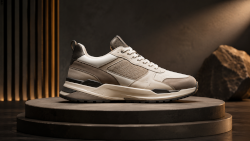
Footwear
Nike is recognized as the largest seller of athletic footwear globally, with innovative designs for various athletic functions and casual wear.

Sporting Goods
Nike offers a comprehensive range of performance equipment and accessories, such as bags, socks, sport balls, and eyewear, which are crucial for athletic and recreational activities.

Mobile Applications
Nike provides interactive digital products and consumer experiences through fitness apps that enhance user engagement and support their brand ecosystem.

Customer Loyalty
Nike has cultivated a strong emotional connection with its customers through effective marketing, endorsements, and community engagement. This loyalty results in repeat purchases and a robust customer base that is less likely to switch to competitors.

Intangible Assets
Nike possesses a highly recognized and valuable brand that resonates globally. Its brand equity is a significant moat as it fosters customer loyalty and allows for premium pricing that competitors find hard to match.