Railway Stocks
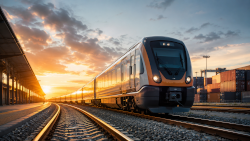
Railway transport stocks represent investments in companies involved in the movement of goods and passengers via rail networks. This sector plays a crucial role in global trade and transportation. Investors in these stocks should consider both industry developments and the broader economic landscape when making decisions.
Stock | Market Cap | Revenue | Price to Earnings | Dividend Yield | Explanation | |
|---|---|---|---|---|---|---|
 | UNPUnion Pacific Corp | 174.4B | 25.41B | 23.81 | 1.88 | As a significant player in the railway sector, Union Pacific operates a comprehensive freight railroad network that connects 23 states, facilitating the movement of various commodities and goods. |
 | CSXCSX Corp | 92.77B | 14.51B | 28.78 | 1.08 | As a major player in the freight rail industry, CSX utilizes its extensive rail network to transport diverse cargo across the eastern United States and parts of Canada. The company offers services that span multiple sectors including manufacturing, agricultural, and energy sectors, making railway transport a core aspect of its business. |
 | NSCNorfolk Southern Corp | 75.33B | 12.54B | 28.58 | 1.61 | As a key player in the American freight railroad industry, Norfolk Southern primarily offers railway transportation services for a wide range of commodities, including agricultural products, chemicals, metals, and coal. Their operations are vital for moving freight along critical rail corridors. |
 | WABWestinghouse Air Brake Technologies Corp | 49.91B | 11.98B | 39.34 | 0.39 | Wabtec is a prominent manufacturer of equipment specifically tailored for the railway sector, including new and modernized locomotives, aftermarket parts, and essential components for freight cars. Its focus on rail transport makes this category particularly relevant to its core offerings. |
 | JBHTJ B Hunt Transport Services Inc | 25.91B | 12.70B | 38.42 | 0.65 | The company operates a significant intermodal segment which utilizes partnerships with major rail carriers for long-haul routes. This integration of rail and truck services is a crucial aspect of their operations. |
 | ITTITT Inc | 19.35B | 4.73B | 45.93 | 0.64 | The company's Motion Technologies division also supplies energy absorption equipment and shock absorbers specifically for the rail sector, indicating a significant presence in railway transport systems. |
 | MATXMatson Inc | 6.41B | 3.45B | 13.83 | 0.7 | Under its logistics services, Matson Logistics offers multimodal transportation that includes intermodal rail services, crucial for bridging ocean transport with land-based logistics. |
 | GATXGATX Corp | 6.33B | 2.05B | 17.21 | 1.47 | As a major player in the railway transport industry, GATX is involved in the leasing of a substantial fleet of railcars, covering operations in North America, Europe, and India. This directly connects to the railway transport category as they provide essential services that support the movement of goods via rail. |
 | CTOSCustom Truck One Source Inc | 2.46B | 2.03B | 114.94 | 0 | Custom Truck serves the rail sector, providing specialized equipment and services necessary for maintenance and upgrades, thus directly linking it to railway transport infrastructure. |
 | HUBGHub Group Inc | 2.45B | 3.72B | 23.43 | 1.22 | The company focuses on intermodal transportation that combines rail services with local trucking, providing nationwide delivery solutions and operating a significant fleet of shipping containers. |
 | TRNTrinity Industries Inc | 2.30B | 2.04B | 6.78 | 4.29 | Trinity Industries is a prominent provider of railcar products and services across North America, focusing on railcar leasing, manufacturing, maintenance, and modifications. |
 | WERNWerner Enterprises Inc | 2.27B | 3.25B | -49.06 | 1.48 | The Werner Logistics segment includes intermodal transportation services, which utilize rail solutions in coordination with truck transport to offer integrated logistics solutions across North America. |
 | GBXGreenbrier Companies Inc | 1.40B | 2.62B | 13.14 | 2.98 | The core operations of Greenbrier revolve around railway transport, as the company designs, manufactures, and markets freight railcars utilized in the movement of goods and materials across rail networks. |
 | KOPKoppers Holdings Inc | 857.4M | 1.89B | -9.87 | 0.82 | The company provides essential products such as pressure-treated railroad ties and related services, including inspection and engineering for railroad bridges, positioning itself as a leading supplier in the North American railroad market. |
 | FSTRL.B. Foster Co | 405.4M | 558.3M | 35.62 | 0 | The company specializes in providing a wide range of products and services for freight and passenger railroads, including rail distribution, insulated rail joints, and transit products. |
Future Outlook
- Advancements in Technology: The integration of automation, artificial intelligence, and predictive analytics is improving operational efficiency in the railway industry. Smart technologies are expected to optimize route planning, reduce costs, and enhance safety, presenting significant investment opportunities in tech-focused railway companies.
- Growth of E-commerce and Global Trade: With the continuous rise of e-commerce and the need for global supply chain connectivity, the demand for freight transportation via rail is growing. Investments in companies offering innovative solutions for freight logistics could capitalize on these trends, especially as demand for sustainable shipping increases.
- Sustainability and Green Initiatives: Railways are considered one of the most eco-friendly modes of transportation. The growing emphasis on sustainability and decarbonization presents opportunities for railway companies investing in green technologies, such as electric trains and hydrogen fuel alternatives.
- Government Support and Infrastructure Investment: Many governments are investing in railway infrastructure to improve national and regional connectivity. Policies supporting public transportation and rail network expansion offer promising growth opportunities for railway stock investments, especially in emerging markets.
Risk Analysis
- Economic Slowdowns: Railway transport is highly sensitive to economic cycles. In times of economic downturn, demand for both freight and passenger services may decline, affecting revenues and stock performance. Investors should be prepared for volatility during such periods.
- Regulatory and Policy Changes: Changes in government policies, such as stricter environmental regulations or altered infrastructure spending, can significantly affect the profitability of railway companies. New laws or tariffs, particularly in international markets, could introduce unforeseen risks.
- High Operational Costs: Railway companies often face substantial operational costs, including maintenance of infrastructure, fuel prices, and labor. These expenses can erode profit margins, especially in times of rising costs or inefficiencies.
- Competition from Alternative Transport Modes: The growth of alternative transport modes such as electric vehicles, drones, and autonomous trucking could reduce the demand for rail transportation, especially for freight. Investors need to consider the potential displacement of rail services by new technologies.


