Seneca Foods Corp B (SENEB)
Food, Beverage and Tobacco • Consumer Staples
Financial Metrics
Price to Earnings10.71x
Revenue Growth (1Y)12.46%
Debt to Equity0.29x
Strengths
Valuation
Seneca Foods Corp B is slightly undervalued
News
All
Press Releases
News
Filings

August 06, 2026Seneca Foods Reports Sales and Earnings for the Three Months Ended June 27, 2026
August 06, 202610-Q Quarterly Report for 2027 Q1
June 11, 2026Seneca Foods Reports Sales and Earnings for the Quarter and Twelve Months Ended March 31, 2026
June 11, 202610-K Annual Report for 2026 FY
March 02, 2026Seneca Foods Announces Purchase of the Green Giant U.S. Frozen Business
February 05, 2026Seneca Foods Reports Sales and Earnings for the Quarter and Nine Months Ended December 27, 2025
February 05, 202610-Q Quarterly Report for 2026 Q3
November 05, 2025Seneca Foods Reports Sales and Earnings for the Quarter and Six Months Ended September 27, 2025
November 05, 202510-Q Quarterly Report for 2026 Q2
August 07, 2025Seneca Foods Reports Sales and Earnings for the Three Months Ended June 28, 2025
August 07, 202510-Q Quarterly Report for 2026 Q1
June 12, 2025Seneca Foods Reports Sales and Earnings for the Quarter and Twelve Months Ended March 31, 2025
June 12, 202510-K Annual Report for 2025 FY
February 06, 2025Seneca Foods Reports Sales and Earnings for the Quarter and Nine Months Ended December 28, 2024
February 06, 202510-Q Quarterly Report for 2025 Q3
November 06, 2024Seneca Foods Reports Sales and Earnings for the Quarter and Six Months Ended September 28, 2024
November 06, 202410-Q Quarterly Report for 2025 Q2
August 08, 2024Seneca Foods Reports Sales and Earnings for the Three Months Ended June 29, 2024
August 08, 202410-Q Quarterly Report for 2025 Q1
June 13, 2024Seneca Foods Reports Sales and Earnings for the Quarter and Twelve Months Ended March 31, 2024
June 13, 202410-K Annual Report for 2024 FY
February 08, 2024Seneca Foods Reports Sales and Earnings for the Quarter and Nine Months Ended December 30, 2023
February 08, 202410-Q Quarterly Report for 2024 Q3
November 21, 2023Urgent – Food Recall Because of Potential Undeclared Allergen Due to Mislabel
November 09, 2023Seneca Foods Reports Sales and Earnings for the Quarter and Six Months Ended September 30, 2023
November 09, 202310-Q Quarterly Report for 2024 Q2
November 08, 2023Seneca Foods Announces Purchase of Assets Related to the Green Giant U.S. Shelf-Stable Business
August 09, 2023Seneca Foods Reports Sales and Earnings for the Three Months Ended July 1, 2023
August 09, 202310-Q Quarterly Report for 2024 Q1
July 31, 202310-K/A Annual Report for 2023 FY
June 13, 2023Seneca Foods Reports Sales and Earnings for the Quarter and Twelve Months Ended March 31, 2023
June 13, 202310-K Annual Report for 2023 FY
February 08, 202310-Q Quarterly Report for 2023 Q3
November 09, 202210-Q Quarterly Report for 2023 Q2
August 11, 202210-Q Quarterly Report for 2023 Q1
June 10, 202210-K Annual Report for 2022 FY
February 10, 202210-Q Quarterly Report for 2022 Q3
November 12, 202110-Q Quarterly Report for 2022 Q2
A. Company Overview
Seneca Foods Corporation is a prominent American firm specializing in the production and marketing of packaged fruits and vegetables. Founded in 1949, the company has transformed through both organic growth and strategic acquisitions into a leading player in the food packaging industry. Its operations are characterized by a robust infrastructure, comprising 26 primary facilities across the United States. These facilities include packaging plants, can manufacturing units, seed production operations, farming endeavors, and a logistical network designed to support its distribution activities.
Headquartered in Fairport, New York, the company’s administrative address is 350 WillowBrook Office Park, Fairport, New York 14450. Seneca Foods boasts a diverse facility landscape, with significant operations located in key agricultural states, including New York, Michigan, Oregon, Wisconsin, Washington, Idaho, Illinois, and Minnesota. Adjacent to its production plants are strategically positioned warehouses to optimize distribution efficiency.
The company's overarching business strategy is aimed at augmenting market share and enhancing sales and margins. This includes initiatives to solidify leadership within the packaged fruit and vegetable sector, provide cost-efficient high-quality products, identify growth opportunities for better returns, and pursue strategic acquisitions that leverage its core competencies.
B. Principal Products and Markets
The company offers a variety of products that include canned, frozen, and jarred produce, alongside snack chips. Its extensive portfolio primarily targets major grocery outlets across the nation, encompassing supermarkets, mass merchandisers, limited assortment stores, club stores, and dollar stores. Furthermore, products are sold to foodservice distributors, restaurant chains, industrial markets, and export customers in approximately 55 countries, as well as federal, state, and local governments for various food programs. The company also engages in contract packing agreements for canned and frozen vegetables.
C. Source and Availability of Raw Materials
Seneca Foods procures high-quality raw materials primarily from a network of over 1,200 American farms. Additional inputs, including steel and various packaging materials, are sourced from commodity processors and steel manufacturers. The company faces challenges associated with fluctuations in commodity prices, which can impact production costs and subsequently influence retail prices and consumer purchasing trends. Recent global events, such as conflicts in Russia and Ukraine, and rising operational costs attributed to labor, fuel, and utilities have further complicated the sourcing landscape. To mitigate risks associated with cost inflation, Seneca implements short-term supply contracts, advance purchase agreements with growers, and measures designed for cost savings.
D. Domestic and International Sales
Seneca Foods maintains a balanced approach to its sales strategy, distributing products both domestically and internationally. Precise figures regarding the percentage of domestic versus international sales are determined through ongoing market analysis, ensuring the company's adaptability in varied economic contexts.
E. Intellectual Property
The company has established a noteworthy licensing agreement with B&G Foods, Inc. for the Green Giant® brand name, allowing it to manufacture and market shelf-stable vegetable products across the United States and specific Caribbean regions without incurring royalties. Additionally, it holds licensing rights to the Libby's® brand for a range of thermally packaged vegetables, with royalties payable annually as part of the agreement. The company has cultivated a portfolio of trademarked brands, including Aunt Nellie’s®, CherryMan®, Green Valley®, READ®, and the Seneca® brand itself, thereby enriching its market presence.
F. Seasonality
The company experiences notable seasonal fluctuations in production and sales due to the agricultural cycles inherent in vegetable harvesting. Production ceases in the last fiscal quarter to accommodate maintenance operations, coinciding with periods of low inventory preceding new crop seasons. Revenue peaks are typically observed in the second and third fiscal quarters due to increased holiday season demands. Specific inventory peaks occur in mid-summer for peas and mid-autumn for corn and green beans, significantly influencing scheduling and financial performance.
G. Competition
Seneca Foods operates within a highly competitive landscape characterized by numerous established players in the packaged food sector. Brand recognition, product quality, service, and pricing strategies are critical differentiators in maintaining market position. The company acknowledges competition from multiple sources, including privately held enterprises whose sales figures may surpass those of Seneca.
H. Government Regulation
Operating in the food industry necessitates compliance with rigorous regulations imposed by various governmental agencies at federal, state, and local levels, including the Food and Drug Administration (FDA), the United States Department of Agriculture (USDA), and the Environmental Protection Agency (EPA). These agencies oversee product quality and consumer safety, requiring adherence to stringent labeling, advertising, and environmental protection standards. In this respect, Seneca Foods proactively engages in practices aimed at meeting or exceeding these regulatory expectations.
I. Human Capital
As of March 31, 2024, Seneca employed approximately 2,900 individuals, increasing to about 6,800 during peak harvest seasons with seasonal employees. Every employee is situated within the United States, where the company fosters a culture that emphasizes integrity, respect, and opportunity for internal advancement, underscoring the importance of talent development within the organization.
Stock Infos
SectorConsumer Staples
IndustryFood, Beverage and Tobacco
CEOPaul L. Palmby
Dividends
Food Production & Processing
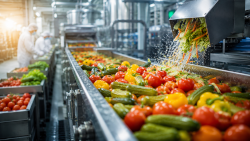
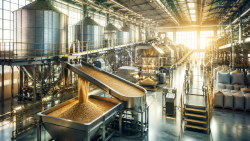
The company's operations include processing vegetables and fruits into various formats for retail, expanding their reach in the food production and processing industry. They also engage in contract packing agreements, indicating their processing capabilities.
Agricultural Products
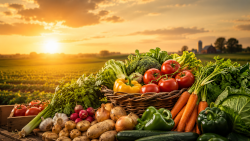
Seneca Foods sources raw materials from a network of over 1,200 American farms, showcasing its reliance on agricultural products for its production of canned, frozen, and jarred goods.
Seed Production
The description mentions that the company has seed production operations as part of its extensive infrastructure, which directly connects it to the seed production category.
Supermarkets & Grocery Stores
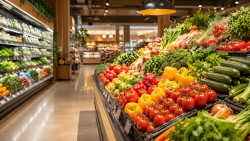
Seneca Foods targets major grocery outlets across the nation as primary market channels for its products, thereby establishing its relevance in the supermarkets and grocery stores category.

Cost Advantage
Seneca Foods Corp has established a cost advantage through efficient production processes and economies of scale, allowing it to produce canned and frozen foods at lower costs than many competitors, thereby enhancing its pricing power in a competitive market.