Power REIT (PW)
Real Estate • Financial
Financial Metrics
Price to Earnings-1.87x
Revenue Growth (1Y)-20.83%
Debt to Equity4.03x
Strengths
Valuation
Power REIT is overvalued
News
All
Press Releases
News
Filings

August 12, 202610-Q Quarterly Report for 2026 Q2
May 19, 2026Power REIT to implement one-for-ten reverse stock split
May 15, 202610-Q Quarterly Report for 2026 Q1
March 31, 202610-K Annual Report for 2025 FY
October 24, 202510-Q Quarterly Report for 2025 Q3
August 05, 202510-Q Quarterly Report for 2025 Q2
May 14, 202510-Q Quarterly Report for 2025 Q1
March 31, 202510-K Annual Report for 2024 FY
October 31, 202410-Q Quarterly Report for 2024 Q3
September 26, 2024Power REIT Receives Notice Resolving NYSE American Listing Standards Deficiency
September 24, 202410-Q/A Quarterly Report for 2024 Q2
September 04, 2024Power REIT Receives Notice of Non-Compliance with NYSE American Continued Listing Standards
August 07, 202410-Q Quarterly Report for 2024 Q2
May 10, 202410-Q Quarterly Report for 2024 Q1
March 29, 2024Power REIT Receives Audit Opinion with Going Concern Explanation
March 29, 202410-K Annual Report for 2023 FY
November 14, 202310-Q Quarterly Report for 2023 Q3
August 14, 202310-Q Quarterly Report for 2023 Q2
May 15, 202310-Q Quarterly Report for 2023 Q1
March 31, 202310-K Annual Report for 2022 FY
November 14, 202210-Q Quarterly Report for 2022 Q3
August 12, 202210-Q Quarterly Report for 2022 Q2
May 09, 202210-Q Quarterly Report for 2022 Q1
March 31, 202210-K Annual Report for 2021 FY
November 15, 202110-Q Quarterly Report for 2021 Q3
A. Company Overview
Power REIT is a Maryland-based internally-managed Real Estate Investment Trust (REIT) that specializes in the acquisition and management of real estate assets. The company has diversified its portfolio to include assets related to transportation and energy infrastructure as well as Controlled Environment Agriculture (CEA) within the United States. As of December 31, 2023, Power REIT managed a range of holdings through its network of twenty-four wholly-owned special purpose subsidiaries, each focused on specific real estate activities, financing, and lease revenue generation.
The Trust’s asset base includes approximately 112 miles of railroad infrastructure through its subsidiary, Pittsburgh & West Virginia Railroad (P&WV), and approximately 501 acres of land used for utility-scale solar power generation, which collectively have a generating capacity of about 88 Megawatts (MW). Additionally, the company holds approximately 256 acres with 2,163,000 square feet of greenhouse properties, either existing or under construction, emphasizing its focus on CEA.
B. Business Model and Strategy
Power REIT primarily engages in the acquisition, leasing, development, and management of special purpose real estate assets. Its business model centers on long-term triple net leases, a structure where tenants assume responsibility for all property-related expenses, including taxes, insurance, and maintenance.
The Trust's business strategy aims to maximize return on investment while maintaining sustainable growth. Key aspects of this strategy include:
- Capital Raising: Effectively monetizing the embedded value in its portfolio to enhance liquidity.
- Asset Sales: Disposing of non-core and underperforming properties.
- Lease Optimization: Actively seeking new tenants for vacant properties, or improving the performance of existing leases.
- Quality Enhancement: Striving to improve the overall quality of properties in the portfolio.
Despite these goals, recent financial struggles have pushed the Trust to closely evaluate liquidity and debt levels.
C. Property Portfolio
Power REIT's property holdings as of December 31, 2023, are diverse, encompassing significant infrastructure and agricultural properties:
- Railroad Infrastructure: Approximately 112 miles of railroad lines and related real estate.
- Solar Power Generation: Around 501 acres of fee simple land leased to utility-scale solar power projects with a total generating capacity of around 88 MW.
- Controlled Environment Agriculture (CEA): Approximately 256 acres dedicated to greenhouse operations, supporting CEA, which utilizes less energy and water while eliminating agricultural runoff.
The Trust aims to capitalize on the increasing demand for sustainable agricultural practices by investing in greenhouse facilities, particularly for cannabis cultivation, and intends to expand its focus on food crops as well.
D. Market Environment
The cannabis industry represents a significant opportunity for Power REIT, given the changing public perception and increasing legalization across various states in the U.S. As of December 31, 2023, 40 states and several territories permit medical use of cannabis. This evolving landscape has renewed interest in investment opportunities tied to cannabis cultivation and real estate.
However, the cannabis market has faced challenges, particularly in 2022 and 2023, characterized by price compression and increased competition, affecting tenant viability and overall portfolio performance. Power REIT has been exploring options for its cannabis assets while also considering emerging trends in CEA for food cultivation, as greater environmental considerations shape consumer preferences and agricultural productivity.
E. Financial Overview
As of the end of 2023, Power REIT faced financial difficulties, with current liabilities surpassing current assets, which raised concerns regarding its ability to continue as a going concern. The Trust had approximately $4.1 million in cash against current loan liabilities of about $15.5 million, comprising primarily a bank loan tied to its greenhouse properties.
Despite these issues, the company undertook actions in early 2024 to improve liquidity through property sales, aiming to restructure its financial standing. Notably, the Trust sold a cannabis cultivation greenhouse in Maine for nearly $4.8 million.
F. Revenue Concentration
Historically, Power REIT has experienced a concentrated revenue stream, with a majority (approximately 84% for the twelve months ended December 31, 2023) of its consolidated revenue derived from two major tenants: Norfolk Southern Railway and Regulus Solar LLC. This reliance on a limited number of tenants heightens exposure to economic or operational risks linked to those entities.
G. Governance and Management
Power REIT’s Board of Trustees is composed of one insider and three independent trustees. David H. Lesser holds multiple roles, including Chairman and Chief Executive Officer, which fosters a strategic vision aligned with shareholder interests. The company operates with a lean management team, utilizing a structure that aligns with its operational needs while ensuring essential governance.
Stock Infos
SectorFinancial
IndustryReal Estate
CEODavid H. Lesser
Dividends

Real Estate Investment Trusts (REITs)
Power REIT is structured as an internally-managed REIT, focusing on the acquisition and management of specialized real estate assets including agricultural and infrastructure properties.

Cannabis Industry
The company invests heavily in Controlled Environment Agriculture (CEA) for cannabis cultivation, capturing opportunities associated with the growing legalization and acceptance of cannabis across many states.
Renewable & Clean Energy
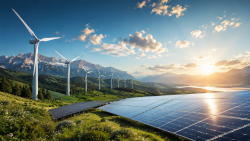
Power REIT's portfolio includes significant investments in utility-scale solar power generation, contributing to renewable energy production and sustainability initiatives.

Railway Transport
The company manages railroad infrastructure, specifically approximately 112 miles of railroad lines, which is a part of its diversified asset portfolio.