Autoliv Inc (ALV)
Automotive • Consumer Discretionary
Financial Metrics
Price to Earnings13.78x
Revenue Growth (1Y)5.9%
Debt to Equity0.83x
Strengths
Valuation
Autoliv Inc is slightly overvalued
News
All
Press Releases
News
Filings

July 17, 2026Auto Supplier Earnings Show State of the Car Market

July 17, 2026 Autoliv: Financial Report April - June 2026
July 17, 202610-Q Quarterly Report for 2026 Q2
July 07, 2026 Autoliv and XPENG Partner to Advance Safer Mobility Worldwide
July 06, 2026 Autoliv Partners with Great Wall Motor to Support Global Expansion
June 30, 2026 Autoliv Retires Repurchased Shares, Decreases Number of Issued Shares
June 26, 2026 President, Autoliv Americas to Resign
June 24, 2026 Invitation to Autoliv's Q2, 2026 Earnings Call
June 03, 2026 Autoliv Strengthens Global Safety Innovation
May 08, 2026 Autoliv to Discontinue Manufacturing Operations in Türkiye
May 07, 2026 Autoliv Announces Results of 2026 Annual Stockholders Meeting
May 06, 2026 Autoliv Declares Quarterly Dividend

April 17, 2026Airbag Giant Autoliv Delivers Blowout Quarter, Thanks To India And China
April 17, 2026 Autoliv: Financial Report January - March 2026
April 17, 202610-Q Quarterly Report for 2026 Q1
March 26, 2026 Invitation to Autoliv's Q1, 2026 Earnings Call
March 24, 2026 Autoliv and RS Taichi Partner to Advance Motorcycle Rider Protection with an Airbag Vest
March 12, 2026 Autoliv and Yamaha Motor Introduce Airbag for Commuter Scooter
March 06, 2026 Autoliv announces appointment of new CFO
March 06, 2026 Autoliv: Board of Directors approves renewal of EMTN Programme
February 19, 2026 Martin Lundstedt Not Standing for Re-Election to Autoliv Board of Directors
February 19, 2026 Autoliv publishes its Annual Report for 2025
February 19, 2026 Autoliv Declares Quarterly Dividend
February 19, 202610-K Annual Report for 2025 FY

January 30, 2026Autoliv Recoups Nearly All Tariff Costs But Warns Of Flat 2026 Growth
January 30, 2026 Autoliv: Financial Report October - December 2025

January 11, 2026Consumer Tech News (Jan 5-9): Semiconductors Steal CES 2026 Spotlight, AI Regulation Tightens As Governments Crack Down & More
January 08, 2026 Invitation to Autoliv's Q4, 2025 Earnings Call
January 05, 2026 Autoliv and Tensor Introduce World's First Foldable Steering Wheel for autonomous driving
December 31, 2025 Autoliv Retires Repurchased Shares, Decreases Number of Issued Shares

December 29, 2025P/E Ratio Insights for Autoliv
December 29, 2025 Autoliv Provides Update Regarding Resignation Date of Fredrik Westin
November 11, 2025 Autoliv Declares Increased Quarterly Dividend

October 17, 2025Autoliv Recovers Most Tariff Costs And Reaffirms Strong Outlook
October 17, 2025 Autoliv: Financial Report July - September 2025
October 17, 202510-Q Quarterly Report for 2025 Q3
October 14, 2025 Autoliv and CATARC in Strategic Partnership

October 09, 2025Autoliv's New Joint Venture In China Aims To Revolutionize Automotive Safety Electronics
October 09, 2025 Autoliv and HSAE - New Strategic Joint Venture to Advance Automotive Safety Electronics
September 30, 2025 Autoliv Retires Repurchased Shares, Decreases Number of Issued Shares
September 18, 2025 Invitation to Autoliv's Q3, 2025 Earnings Call

August 22, 2025Mark Cuban Says Insurance Industry 'Concerned About Melting Ice' As Antarctic Ice Loss Hits 'Potentially Irreversible' Tipping Point

August 11, 2025Meta Taps PIMCO, Blue Owl For $29 Billion Louisiana Data Center Buildout As AI Infrastructure Race Heats Up

July 18, 2025Autoliv's Q2 Pops On Solid Tariff Recovery, But China Overhang Pressures Stock
July 18, 202510-Q Quarterly Report for 2025 Q2

June 25, 2025This ServiceNow Analyst Begins Coverage On A Bullish Note; Here Are Top 5 Initiations For Wednesday

June 04, 2025Autoliv Boosts Shareholder Returns With 21% Dividend Hike, New $2.5 Billion Buyback Program

April 16, 2025Autoliv Stock Jumps After Q1 Beat As Tariff Pressures Prove Negligible
April 16, 202510-Q Quarterly Report for 2025 Q1
February 20, 202510-K Annual Report for 2024 FY

January 31, 2025Autoliv Tops Q4 Earnings Estimates Despite Sales Miss, Cost Controls Drive Margin Gains
October 18, 202410-Q Quarterly Report for 2024 Q3
July 19, 202410-Q Quarterly Report for 2024 Q2
April 26, 202410-Q Quarterly Report for 2024 Q1
February 20, 202410-K Annual Report for 2023 FY
October 20, 202310-Q Quarterly Report for 2023 Q3
July 21, 202310-Q Quarterly Report for 2023 Q2
April 21, 202310-Q Quarterly Report for 2023 Q1
February 16, 202310-K Annual Report for 2022 FY
October 21, 202210-Q Quarterly Report for 2022 Q3
July 22, 202210-Q Quarterly Report for 2022 Q2
April 22, 202210-Q Quarterly Report for 2022 Q1
February 22, 202210-K Annual Report for 2021 FY
October 22, 202110-Q Quarterly Report for 2021 Q3
A. Company Overview
Autoliv, Inc. is a Delaware-based corporation with its main executive offices located in Stockholm, Sweden. It functions as a holding corporation and primarily consists of two significant subsidiaries: Autoliv AB and Autoliv ASP, Inc. As a leading entity in the automotive industry, Autoliv develops, manufactures, and supplies passive safety systems, which are crucial for enhancing the safety of vehicle occupants.
The company's fiscal year concludes on December 31. As of 2023, Autoliv employs approximately 70,300 individuals worldwide, with a notable proportion of temporary personnel. Its comprehensive operations span across 63 production facilities in 23 countries. Autoliv's customer base includes some of the largest automotive manufacturers globally, making its influence and reach significant within the industry.
B. Business Activities
Autoliv's primary focus lies in the development and supply of passive safety systems. These systems are designed to protect occupants in the event of a vehicle collision and encompass a wide array of products:
- Airbag Systems: This includes frontal-impact airbags, side-impact airbags, and the technology related to their deployment, such as inflators and steering wheels.
- Seatbelt Systems: Advanced seatbelt technologies, including pretensioners and load limiters, which significantly reduce the risk of severe injuries in crashes.
- Other Technologies: This comprises battery cut-off switches and emerging mobility safety solutions aimed at pedestrian protection and enhanced rider safety, particularly for powered two-wheelers.
Through its division, Mobility Safety Solutions, Autoliv also focuses on innovative safety solutions adapted for real-life scenarios, reflecting its commitment to evolving market needs amid urbanization and demographic changes.
C. Market Environment
The automotive industry is undergoing notable shifts, with an increased focus on safety. Autoliv identifies key trends that bolster the demand for safety systems:
- Shifts Towards Vision Zero: A societal movement aimed at eliminating traffic fatalities, affecting consumer preferences and regulations.
- Urbanization and Demographic Changes: Growing megacities and aging populations lead to unique safety challenges that necessitate innovative solutions.
- Regulatory Changes: Evolving safety regulations globally drive higher content requirements for safety systems.
- Electric Vehicles: The rise of electric vehicles could create more spacious interiors, thus requiring advanced safety systems.
Key market drivers for growth include light vehicle production (LVP) and content per vehicle (CPV). Autoliv has demonstrated resilience and adaptability in navigating challenges posed by supply chain disruptions while anticipating growth in passive safety markets.
D. Competitive Landscape
Autoliv holds a commanding market position, with an estimated global market share of approximately 45% in the passive safety sector. Competitors include:
- ZF: A leading global supplier with extensive capabilities across driveline and safety technologies.
- Joyson Safety Systems: Formed from the merger of Key Safety Systems and Takata Corporation, representing significant competition particularly in airbags.
- Local Suppliers: Numerous regional players in Japan, South Korea, Brazil, and China often establish deep ties with national vehicle manufacturers.
The competitive focus remains on high customer satisfaction, innovative technologies, and effective cost management to maintain and grow market share.
E. Manufacturing and Production
The manufacturing capabilities of Autoliv are robust, with specialized facilities dedicated to producing various components and assembling complete safety systems. Key production outputs include millions of seatbelt systems and airbags that are dispatched through a "just-in-time" delivery system, aligning closely with the needs of automotive manufacturers. This model enables rapid adaptation to order fluctuations while minimizing inventory costs.
Raw material sourcing is crucial to operational efficiency, accounting for about 55% of net sales in 2023. Strategies to manage raw material costs include competitive sourcing and exploring new materials that promise lower carbon emissions.
F. Quality Management
Quality is integral to Autoliv's operational strategy. The company emphasizes a proactive “zero-defect” policy, ensuring that its safety products meet the highest standards. A quality initiative known as Q5 guides continuous improvements aimed at enhancing product quality and reliability. This encompasses rigorous checks throughout product development and manufacturing processes.
Autoliv employs a structured approach to quality assurance that includes robust product architecture, comprehensive supplier management, and advanced tracing systems for post-delivery evaluations. Certification standards such as IATF 16949:2016 ensure compliance with industry best practices.
G. Research, Development, and Engineering
Investment in research and development is fundamental to Autoliv’s strategy. In 2023, gross expenditures for research, development, and engineering totaled $618 million, reflecting a commitment to innovation. Activities range from customer-funded projects to the exploration of new technologies and products that enhance safety offerings.
The focus of R&D efforts is not segmented by customer dominance; no single project accounted for more than 4% of total R&D costs in 2023. This diversified investment positions Autoliv to be at the forefront of safety innovations while serving customer needs.
H. Customer Base and Dependence
A significant portion of Autoliv's sales is concentrated among its top customers, with the five largest clients accounting for approximately 48% of consolidated sales in 2023. This dependency highlights the importance of nurturing relationships within the automotive industry. The geographic diversification of customer bases spans across regions, including substantial recognition in Asian, European, and American markets.
I. Environmental Sustainability
Autoliv is committed to sustainable operations and has set ambitious climate targets aimed at carbon neutrality in its direct operations by 2030 and net-zero emissions across its supply chain by 2040. Active engagement with stakeholders ensures a focus on responsible practices with reduced greenhouse gas emissions, energy consumption, and waste management.
Stock Infos
SectorConsumer Discretionary
IndustryAutomotive
CEOMikael Bratt
Dividends
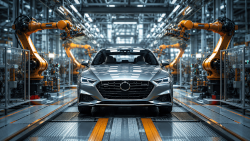
Automobile Manufacturing
Autoliv develops and supplies passive safety systems specifically designed for the automotive industry, making it an essential player in automobile manufacturing safety.
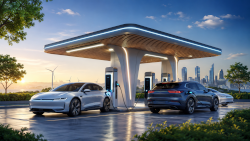
Electric Vehicles (EV)
As the market for electric vehicles grows, Autoliv's innovative safety solutions are particularly relevant, especially regarding advanced features that accommodate the unique designs and interior configurations of EVs.

Autonomous Driving
In the context of evolving automotive technologies, Autoliv is focused on enhancing safety systems that are critical for autonomous vehicles and the broader trends in mobility safety solutions.

Clean Technology (CleanTech)
Autoliv's commitment to sustainable operations and its initiatives for reducing carbon emissions align with the goals of clean technology, specifically in the realm of vehicle safety improvements.