
Dakota Gold Corp. (DC)
Metals and Mining • Basic Materials
Financial Metrics
Price to Earnings-23.28x
Revenue Growth (1Y)No Data
Debt to Equity0.006x
Strengths
Valuation
Dakota Gold Corp. is overvalued
News
All
Press Releases
News
Filings

August 12, 202610-Q Quarterly Report for 2026 Q2
May 14, 202610-Q Quarterly Report for 2026 Q1
March 25, 202610-K Annual Report for 2025 FY
November 13, 202510-Q Quarterly Report for 2025 Q3
August 13, 202510-Q Quarterly Report for 2025 Q2
May 08, 202510-Q Quarterly Report for 2025 Q1
March 20, 202510-K Annual Report for 2024 FY
November 13, 202410-Q Quarterly Report for 2024 Q3
August 13, 202410-Q Quarterly Report for 2024 Q2
May 10, 202410-Q Quarterly Report for 2024 Q1
March 28, 202410-K Annual Report for 2023 FY
November 13, 202310-Q Quarterly Report for 2023 Q3
August 10, 202310-Q Quarterly Report for 2023 Q2
May 10, 202310-Q Quarterly Report for 2023 Q1
March 22, 202310-KT Annual Report for 2022 FY
November 09, 202210-Q Quarterly Report for 2023 Q2
August 10, 202210-Q Quarterly Report for 2023 Q1
June 28, 202210-K Annual Report for 2022 FY
A. Company Overview
Dakota Gold Corp. operates in the mineral exploration sector, focusing specifically on the acquisition, exploration, and development of mineral properties within the United States. The company was initially incorporated as JR Resources Corp. on November 15, 2017, under the British Columbia Business Corporations Act. The name change to Dakota Gold Corp. occurred following its domestication process in 2020, transitioning its registration from British Columbia to Nevada. On March 31, 2022, the company further expanded its operations through a merger with Dakota Territory Resource Corp., a Nevada-based entity. Most recently, on May 14, 2024, Dakota Gold Corp. changed its state of incorporation to Delaware with shareholder approval.
The headquarters of Dakota Gold Corp. is situated in Lead, South Dakota, which serves as a strategic location given the company's focus on the Homestake District, an area rich in mineral resources.
B. Business Strategy
Dakota Gold Corp. is currently in the exploration stage and, as of the latest reporting, has not generated any revenue from operations. The company's strategic approach revolves around advancing mineral projects from the exploration phase through to development and production phases, as dictated by exploration results. The management team, alongside its technical staff, brings significant experience in mining and exploration, particularly in the Homestake District. The objective is to leverage this expertise to enhance stakeholder value.
C. Portfolio and Properties
Dakota Gold Corp. maintains full ownership of a substantial portfolio in the Homestake District, encompassing 2,147 unpatented claims and surface leases that span over 49,500 acres. Noteworthy properties within this portfolio include Maitland, the Barrick Option, Richmond Hill, among others. This substantial landholdings highlight the company’s commitment to mineral exploration in a historically significant mining area.
On February 6, 2025, Dakota Gold Corp. published an updated Initial Assessment and Technical Report Summary for the Richmond Hill Gold Project. This report identified a measured and indicated mineral resource totaling 307.86 million tonnes (Mt) at an average grade of 0.470 grams per tonne (g/t) gold and 4.83 g/t silver, translating to approximately 4.64 million ounces of gold and 47.77 million ounces of silver. Additionally, the inferred mineral resource was reported at 414.04 Mt at 0.381 g/t gold and 3.91 g/t silver, equating to about 5.06 million ounces of gold and 52.11 million ounces of silver.
Subsequently, on July 7, 2025, an updated financial assessment of Richmond Hill was released, evaluating cash flow implications and reinforcing the mineral project’s economic viability.
D. Market Environment and Competition
As a player in the mineral exploration sector, Dakota Gold Corp. faces competition from numerous other companies, several of which possess greater financial resources. This competitive landscape impacts access to desirable mineral properties, investment capital, and essential personnel. The competition for equipment and additional resources necessary for exploration activities further complicates the operating environment.
E. Regulatory Context
Dakota Gold Corp. operates in a highly regulated environment, requiring a multitude of permits from local, state, and federal agencies to conduct exploration and mining activities. This regulatory framework addresses various factors including environmental protection, labor standards, and economic impacts. The necessity of obtaining permits to explore or mine often involves compliance with extensive regulatory requirements, which can entail presenting detailed reclamation and restoration plans to mitigate environmental impacts.
The company must navigate laws that govern air and water quality, community impacts, and property rights. This regulatory environment can impose significant costs and delays on exploration efforts. Future changes in regulation could also affect strategic planning and operational economics.
F. Environmental Regulations
Environmental regulations significantly influence Dakota Gold Corp.'s operational landscape. The company is subject to compliance with federal legislation like the Clean Water Act, Clean Air Act, and National Environmental Policy Act, among others. These laws mandate thorough assessments and permits to ensure environmental integrity during exploration and potential mining activities. Violations of these regulations can lead to severe penalties, emphasizing the importance of adherence to responsible mining practices.
G. Workforce
As of December 31, 2025, Dakota Gold Corp. employs a team of 41 full-time personnel. The workforce is characterized by its specialized expertise in mining and exploration, crucial for advancing the company’s strategic objectives.
H. Office Locations
The principal offices of Dakota Gold Corp. are located in Lead, South Dakota. This location aligns with the company's operational focus on the Homestake District, providing logistical advantages for exploration and potential future mining activities.
Stock Infos
SectorBasic Materials
IndustryMetals and Mining
CEORobert Quartermain
Dividends

Silver Production
Alongside gold, Dakota Gold Corp. also explores for silver as indicated by the reported mineral resources at their project sites. This includes substantial estimated ounces of silver at the Richmond Hill Gold Project, linking the company to silver production activities.
Mining Industry
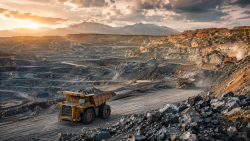
Dakota Gold Corp. is primarily focused on mineral exploration, acquisition, and development of mineral properties, which positions it firmly within the mining industry. The company is engaged in the exploration phase and aims to advance its projects towards production.

Precious Metals
Dakota Gold Corp.'s emphasis on gold and silver places it within the precious metals category. The company’s exploration activities aim to uncover valuable mineral resources vital for the precious metals market.

Gold Production
With significant mineral resources identified, particularly in gold, Dakota Gold Corp. operates within the gold production category. The Richmond Hill Project, which contains millions of ounces of gold, highlights the company's current focus on resources critical for gold production.

Exclusive Resource Access
Dakota Gold Corp. has access to high-quality gold resources, particularly in regions that are rich in mineral deposits. This exclusivity provides a significant advantage over competitors who may not have similar access to such valuable resources.